Wanaparthy
Town in the Mahbubnagar district of Telangana and headquarters of the Wanaparthy (Wanparti) samasthan. It was one of Hyderabad State's five main tributary estates. In 1901 the estate had 124 villages and 62,197 people, and paid the Nizam Rs 76,883 in tribute. Its rajas had ruled from Sugur until 1727.
Download
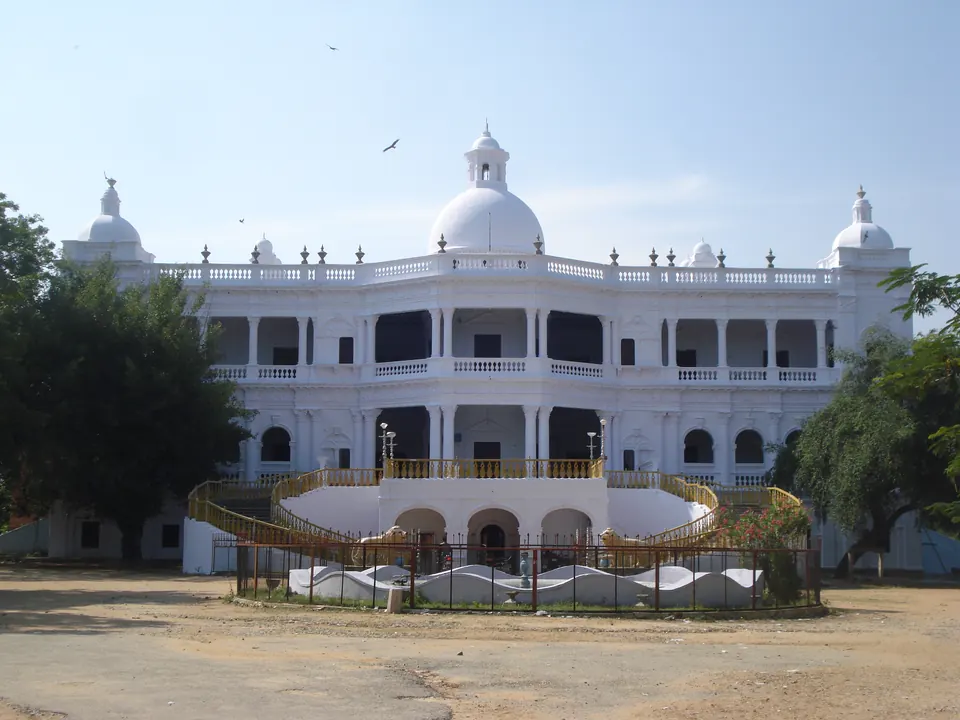
Wanaparthy was the seat of one of the samasthans (tributary estates) within the dominions of the Asaf Jahi Nizams. These estates were held by old Hindu chiefs who paid tribute to the Nizam. The Imperial Gazetteer of 1909 names Wanparti among the five most important samasthans of the state.1 The others were Gadwal, Amarchinta, Jatprole and Palvancha.1
The samasthan
According to the gazetteer’s account of the estate, its 124 villages lay across five taluks of Mahbubnagar district:2
- Nagar Karnul
- Jedcherla
- Mahbubnagar
- Kalvakurti
- Amrabad
The estate covered about 450 square miles and had 62,197 people in 1901.2 Its revenue was 1.5 lakhs, and it paid the Nizam a tribute of Rs 76,883.2 The gazetteer says: “Up to 1727 Sugur was the seat of the Raja, and gave its name to the samasthan, but subsequently Wanparti was selected as the capital.”2
The article on Nagar Karnul taluk gives different totals: 599 square miles and 62,293 people.3 The gazetteer also notes that Sugur and Kotta, by then belonging to Wanaparthy, had once marked the western limit of the lands of the Jatprole chiefs.4
The town
The town had a mill producing castor oil, which was sent to Raichur and Kurnool.2 It made cotton and silk cloth and saris.2 But according to the gazetteer, “their texture is not so fine as those of Amarchinta and Gadwal”.2
Footnotes
-
Imperial Gazetteer of India: Hyderabad State (1909), p. 52 (archive.org (opens in a new tab)). ↩ ↩2
-
Imperial Gazetteer: Hyderabad (1909), p. 299 (archive.org (opens in a new tab)). ↩ ↩2 ↩3 ↩4 ↩5 ↩6 ↩7
-
Imperial Gazetteer: Hyderabad (1909), p. 149 (archive.org (opens in a new tab)). ↩
-
Imperial Gazetteer: Hyderabad (1909), p. 297 (archive.org (opens in a new tab)). ↩
Photos
References
Notes (0)
Sources (1)
Spotted an error on this page? Tell us
Last updated: