Macherla
Town on the Chandravanka in western Palnadu. A Sanskrit and Telugu inscription of 1111 calls it Mahadevi-tataka and records a temple gift by Beta, a Haihaya chief of the Chagi family. In the Palnadu ballad, Brahma Nayudu founds the city. Writers in the 19th century called it the capital of the Palnadu heroes.
Download
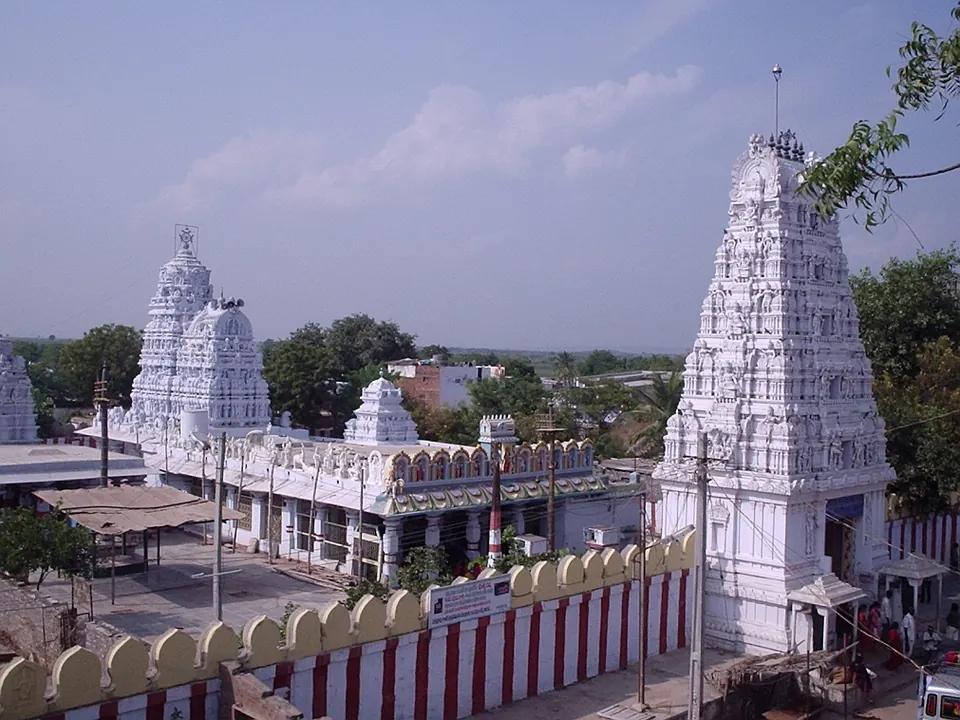
Macherla lies in the west of the Palnadu, about eleven miles south-west of Gurazala. Robert Sewell, who passed through it in 1879, called it “a well-built, prosperous town” with fine temples.1 Gordon Mackenzie (1883) called it “the ancient capital of the Palnad heroes, where are very numerous remains of antiquity”.2 He noted that Sewell had listed nine inscriptions here, the earliest dating to 1249.2
The inscription of 1111
The Naga pillar in the courtyard of the Chennakesavasvamin temple has a Sanskrit and Telugu record of the chief Beta.3 It is dated Saka 1033 (1111; Saka is an Indian way of counting years).3 Beta was the son of Virakama, “the second of the four sons of Chagi Beta of the lunar race of Kartaviryarjuna”.3 The inscription records a gift of land to the Adityesvara temple, built by a man named Aditya “at the capital town Mahadevi-tataka”.3
V. Rangacharya summarised the Government Epigraphist’s report on it.3 He noted that its engravers were Kannada speakers.3 The Epigraphist saw this as a sign of Western Chalukya influence in the region.3 He also found the inscription’s account of building methods interesting.3
The Annual Report on Epigraphy for 1932–33 took this Beta to be the Haihaya chief named in an inscription of 1129 at Gurazala.4 Chilukuri Veerabhadra Rao (1912) cited the same record, calling the place Mahadevicherla.5 See the Haihayas of Kona and Palnadu and Gurazala.
In the ballad
The ballad of the Palnadu heroes opens at “a city called Pala Machapuram”.6 Sewell identified this city with Macherla.6 He thought the epithet Pala, “milk”, might refer to the creamy marble of the district.6
Later in the story Brahma Nayudu breaks with the court at Gurazala.1 He takes the young princes and the people of ninety villages.1 They build “a splendid new city, which they called Macharla, on the banks of the Chandravanka”, with magnificent temples to Vishnu and Siva.1 See Brahma Nayudu. Rangacharya called Macherla “the capital city of the Palnad heroes”.3
Footnotes
-
Sewell, Lists of Antiquarian Remains, Vol. I (1882), Appendix A, p. vi and note 1 (archive.org (opens in a new tab)). ↩ ↩2 ↩3 ↩4
-
Gordon Mackenzie, A Manual of the Kistna District (1883), p. 161 (archive.org (opens in a new tab)). ↩ ↩2
-
V. Rangacharya, A Topographical List of the Inscriptions of the Madras Presidency, Vol. II (1919), p. 812, No. 536 (archive.org (opens in a new tab)). ↩ ↩2 ↩3 ↩4 ↩5 ↩6 ↩7 ↩8 ↩9
-
Annual Report on South-Indian Epigraphy for 1932–33 (1936), Part II, para. 12, p. 59 (archive.org (opens in a new tab)). ↩
-
Chilukuri Veerabhadra Rao, Andhrula Charitramu, Part II (1912), p. 196 (archive.org (opens in a new tab)). In Telugu. ↩
-
Robert Sewell, Lists of the Antiquarian Remains in the Presidency of Madras, Vol. I (1882), Appendix A, p. ii and note 2 (archive.org (opens in a new tab)). ↩ ↩2 ↩3
Photos
Related
People
Brahma Nayudu
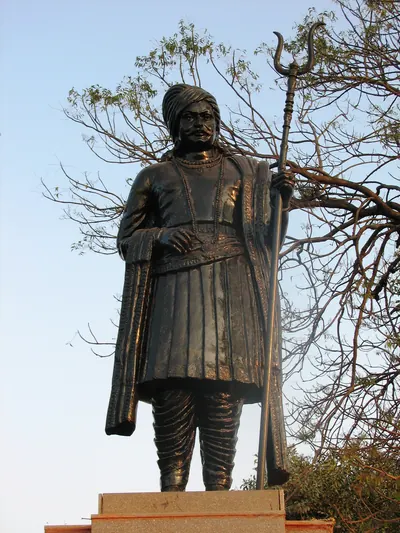
Brahma Nayudu is a hero of the Telugu songs about the Palnati Viralu (Heroes of Palnadu). They describe him as the minister who led one side in the war at Karempudi, where he is still worshipped as a form of Vishnu. He is known only through these songs and traditions of worship. No inscription names him. Proposed dates for his war range from 1080 to 1386.
Unnava Lakshminarayana
Unnava Lakshminarayana was a lawyer and Congress worker from Guntur. Government intelligence reports mentioned him during the Vandemataram movement. He gave up legal practice during non-cooperation. In 1921 he received a year's prison sentence after investigating the forest disputes in Palnadu. In 1932 the government barred him, Unnava Lakshmibayamma and others from holding a civil disobedience conference.
References
Notes (0)
Sources (5)
Spotted an error on this page? Tell us
Last updated: