Kolanupaka
Village in Telangana's Nalgonda district, known as Kollipake in Western Chalukya records. In the 11th and 12th centuries it was the centre of the Kollipake seven-thousand province. A Choda chief, the Paramara prince Jagaddeva and Prince Somesvara (later Somesvara III) governed it for the kings of Kalyani. Its Kannada inscriptions date from 1033 to the reign of Jagadekamalla II.
Download
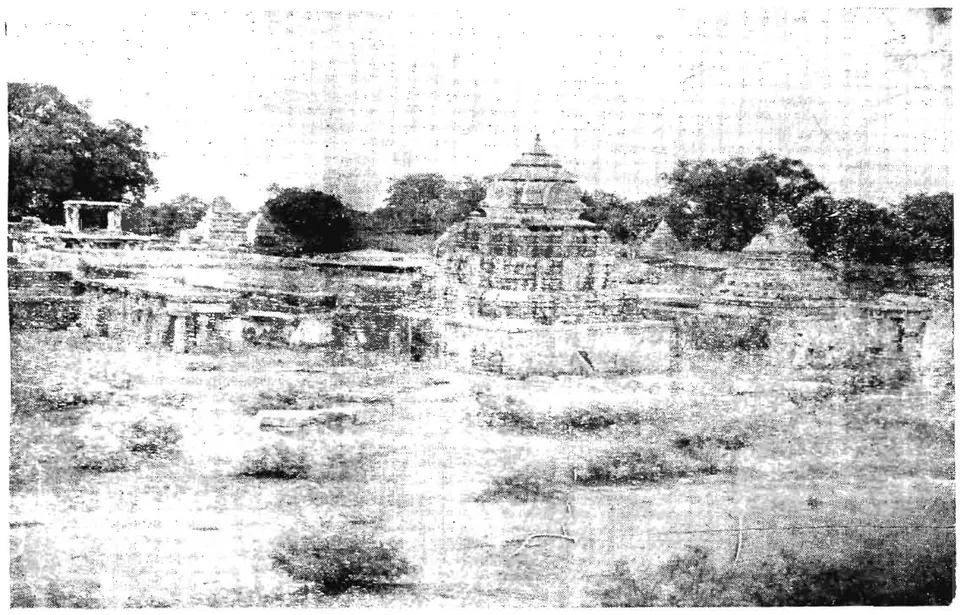
Kolanupaka lies about seventy kilometres south-west of Hanamkonda (Anumakonda).1 According to P. V. Parabrahma Sastry, the Western Chalukya kings directly controlled the country west of the Kakatiya fief of Anumakonda.1 Their officers ran it from Kolanupaka, also called Kollipaka.1 He called this province the Kollipake seven-thousand.2 It was governed by viceroys with the rank of mahamandalesvara (great feudal lord).2
Identifying Kollipake
In 1896 J. F. Fleet found references to Kollipake as a minor capital of Jayasimha II.34 He could not establish where it was.34 He noted that a Kollippakkai appears in Chola inscriptions.34 He also noted that the Lingayat poem Rajasekharavilasa names Kollipaki as the birthplace of the saint Renuka.34
An editor’s note in Robert Sewell’s book of 1932 identifies the Kollippakkai claimed by the Chola Rajendra I with Kulpak, between Hyderabad and Warangal.5 Sewell cited records of Somesvara I (1067) and Vikramaditya VI (1125) at “Kulpak, anciently Kollipaka, 45 miles N.E. of Hyderabad”.67 In 1961 P. B. Desai wrote that the inscriptions found at Kolanupaka show that it was Kollipake.8 He counted it among the early capitals of the Western Chalukyas.8
The Kannada inscriptions
The Kannada inscriptions of Kolanupaka summarised by Desai include these:981011
- a grant of 1033 of the time of Jagadekamalla I
- records of Vikramaditya VI’s reign naming the Choda chief Tondarasa of Kandur (1088) and the Paramara prince Jagaddeva (1104) as rulers of the province
- a gift of 1107 to the temple of Jagaddeva-Narayana
- the pillar of Prince Somesvara of 1125
- a damaged record of Jagadekamalla II981011
See the inscription of Jagaddeva and the pillar of Kumara Somesvara.
Footnotes
-
P. V. Parabrahma Sastry, The Kakatiyas of Warangal (1978), p. 51. ↩ ↩2 ↩3
-
Parabrahma Sastry, The Kakatiyas of Warangal (1978), p. 69. ↩ ↩2
-
J. F. Fleet, “Dynasties of the Kanarese Districts”, Gazetteer of the Bombay Presidency I, pt. II (1896), p. 437 and note 6 (archive.org (opens in a new tab)). ↩ ↩2 ↩3 ↩4
-
Fleet, “Dynasties of the Kanarese Districts” (1896), p. 438, note (archive.org (opens in a new tab)). ↩ ↩2 ↩3 ↩4
-
Robert Sewell, The Historical Inscriptions of Southern India (1932), p. 62, editor’s note (archive.org (opens in a new tab)). Paraphrased. ↩
-
Sewell, Historical Inscriptions (1932), p. 81 (archive.org (opens in a new tab)). Paraphrased except for the short phrase quoted. ↩
-
Sewell, Historical Inscriptions (1932), p. 99 (archive.org (opens in a new tab)). Paraphrased. ↩
-
Desai, Kannada Inscriptions of Andhra Pradesh (1961), p. 17, Nos. 45–46 (archive.org (opens in a new tab)). Paraphrased except for the short phrase quoted. ↩ ↩2 ↩3 ↩4
-
P. B. Desai, introduction to P. Sreenivasachar, Kannada Inscriptions of Andhra Pradesh (Andhra Pradesh Government Archaeological Series 3, 1961), p. 16, Nos. 44–45 (archive.org (opens in a new tab)). Paraphrased. ↩ ↩2
-
Desai, Kannada Inscriptions of Andhra Pradesh (1961), p. 18, Nos. 46–48 (archive.org (opens in a new tab)). Paraphrased. ↩ ↩2
-
Desai, Kannada Inscriptions of Andhra Pradesh (1961), p. 19, Nos. 49–52 (archive.org (opens in a new tab)). Paraphrased. ↩ ↩2
Photos
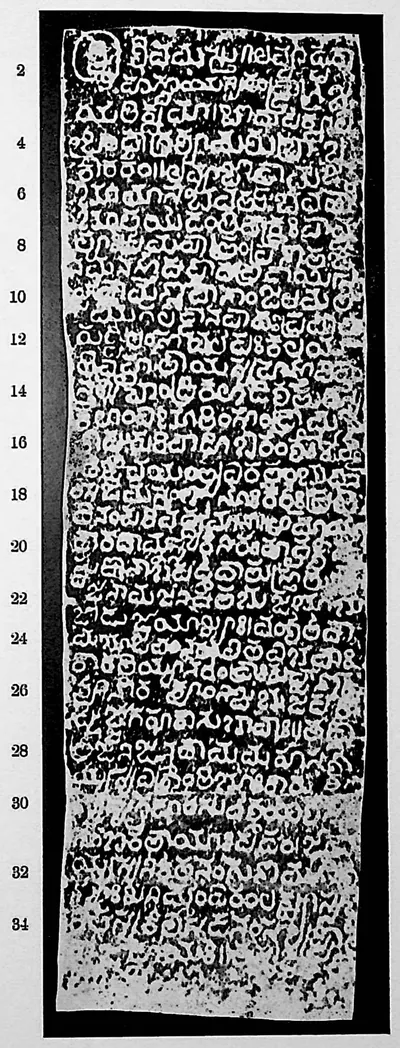 "Kulpak inscription", face I (Sreenivasachar, Corpus of Inscriptions in the Telingana Districts II, Plate 27 (PDF p. 274))Inscription rubbing · 1940
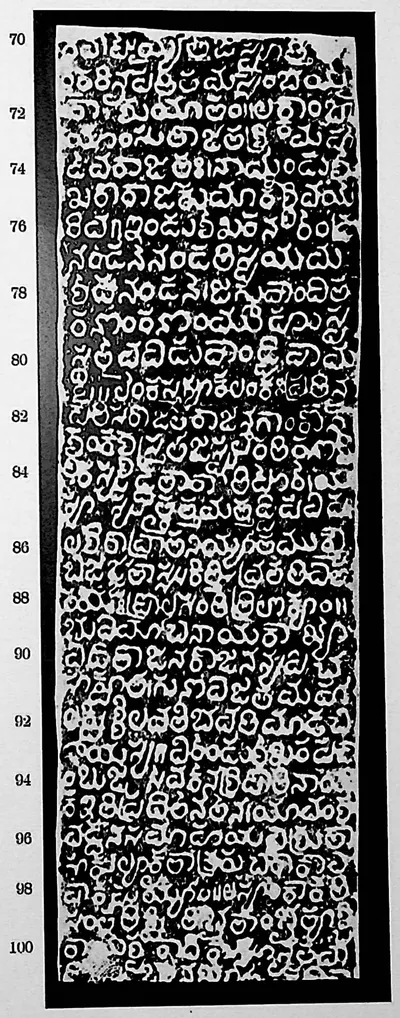 "Kulpak inscription", face I (Sreenivasachar, Corpus of Inscriptions in the Telingana Districts II, Plate 28 (PDF p. 276))Inscription rubbing · 1940
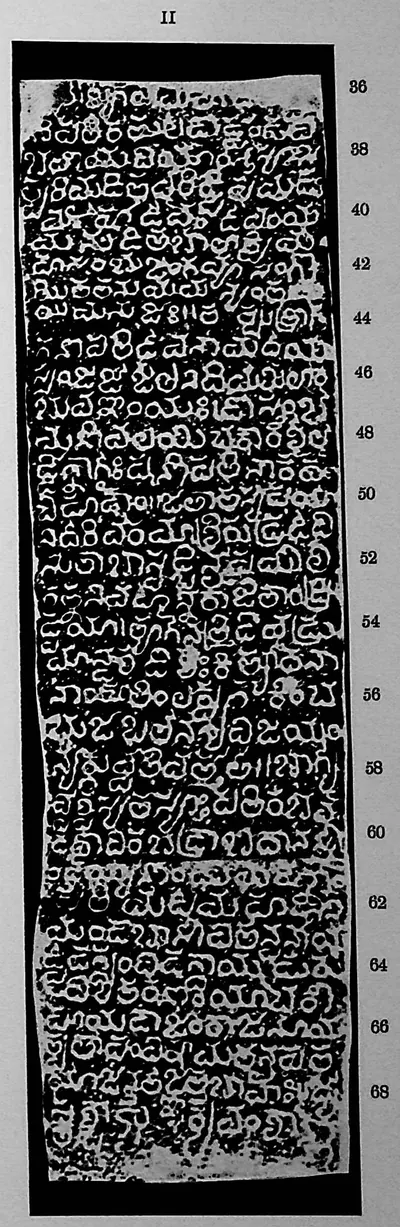 "Kulpak inscription", face II (Sreenivasachar, Corpus of Inscriptions in the Telingana Districts II, Plate 27 (PDF p. 274))Inscription rubbing · 1940
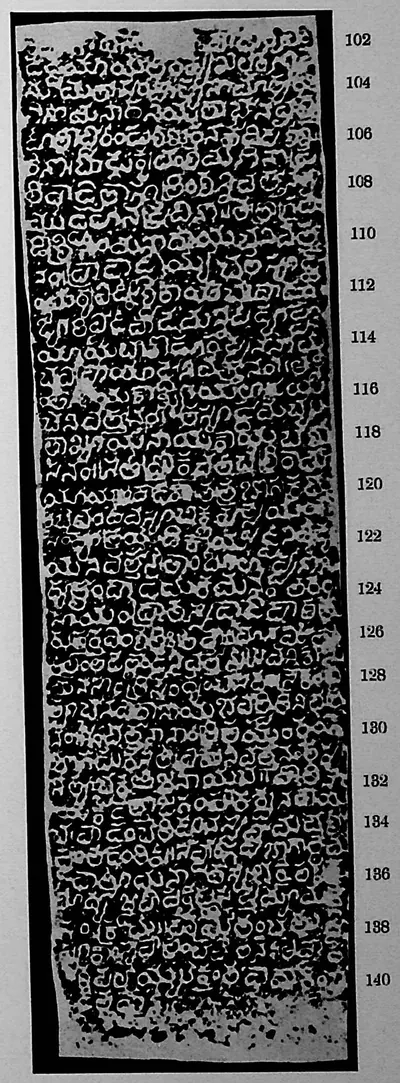 "Kulpak inscription", face II (Sreenivasachar, Corpus of Inscriptions in the Telingana Districts II, Plate 28 (PDF p. 276))Inscription rubbing · 1940
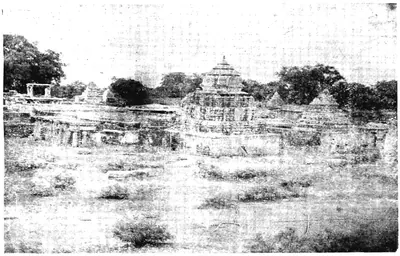 "Plate III: Ancient temples of Kolanpaka" (Census of India 1961, Fairs and Festivals, Nalgonda District, 1964, plate)Photograph · 1964
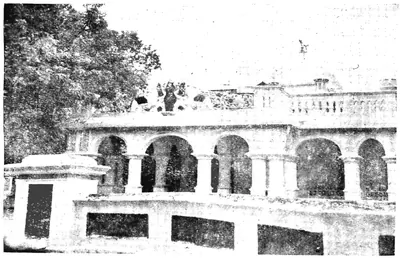 "Plate IV: The Jain temple, Kolanpaka" (Census of India 1961, Fairs and Festivals, Nalgonda District, 1964, plate)Photograph · 1964
Related
People
Indra III (Rashtrakuta)
c. 915–917 CE
Indra III, called Nityavarsha, was the Rashtrakuta king crowned in February 915, a grandson of Krishna II. A pillar inscription of his reign at Padaturu, in the Nalgonda country, names a chief who governed the Kollipaka Seven Thousand. The Cuddapah gazetteer dates the Rashtrakuta push into Kadapa to his reign. K. A. Nilakanta Sastri and N. Venkataramanayya wrote that he sent a large army into Vengi to put Yuddhamalla II on the Eastern Chalukya throne, and his daughter married Arikesari II of Vemulavada.
Rajendra I (Chola)
c. 1012–1043 CE
Rajendra I became Chola king in 1012. He was Rajaraja I's son and founded Gangaikondacholapuram. As a prince, he defeated the Eastern Chalukya Vimaladitya, his sister's husband, and raised a victory pillar on Mahendragiri. As king, he fought the Western Chalukya Jayasimha II and claimed Kollippakkai (Kolanupaka). His general marched to the Ganges while Rajendra waited on the Godavari, in a campaign Krishna Sastri dated to 1028. His daughter Ammangadevi married the Eastern Chalukya Rajaraja Narendra. Their son became Kulottunga I.
Jayasimha II (Western Chalukya)
c. 1015–1042 CE
Jayasimha II, also called Jagadekamalla, was a Western Chalukya king of Kalyani who ruled from about 1015 to 1042. He fought the Chola king Rajendra I. His records name Kollipake as one of his smaller capitals. Scholars now identify it with Kolanupaka in Nalgonda district, where an inscription of his reign dates to January 1033.
Rajadhiraja I (Chola)
1018–1052 CE
Rajadhiraja I was a Chola king, Rajendra I's eldest son and his co-regent from 1018. He fought the Western Chalukya Somesvara I. His Manimangalam inscription claims that he burned the centre of Kollippakkai (Kolanupaka), a Western Chalukya city on Telangana's edge. It also lists the Andhra king among those who paid him tribute. An inscription of his 28th year survives at Kalahasti. He died fighting Somesvara at Koppam in 1052.
Somesvara I
c. 1042–1068 CE
Somesvara I was a Western Chalukya king with the titles Trailokyamalla and Ahavamalla. He ruled about 1042 to 1068 and made Kalyana (Kalyani) his capital. Records of his reign survive at Alampur, Bodhan and Kolanupaka in Telangana. The early Kakatiya chiefs Beta I and Prola I served him. His wars with the Cholas extended into Vengi. Chola inscriptions claim that his army there was destroyed and that his sons were defeated at Kudalasangamam. He drowned himself in the Tungabhadra in 1068.
Somesvara II (Chalukya of Kalyani)
1068–1076 CE
Somesvara II, called Bhuvanaikamalla, was the eldest son of Somesvara I and king of the Western Chalukyas of Kalyani from 1068 to 1076. As a prince he bore the title 'lord of Vengi, the best of towns'. Records of his reign stand across Telangana, at Alampur, Kolanupaka, Bodhan, Palamuru and Inavolu; at Kolanupaka his governor Asagamarasa ruled the Kollipaka Seven Thousand. He allied with Kulottunga I, the 'lord of Vengi', against his brother Vikramaditya VI, who defeated them and took the throne.
Vikramaditya VI
c. 1076–1126 CE
Vikramaditya VI, called Tribhuvanamalla, was a Western Chalukya king of Kalyani. He removed his brother Somesvara II from the throne in 1076 and ruled for fifty years, until 1126. He introduced the Chalukya-Vikrama era in place of the Saka era; most Telangana records of the time use it. As a prince, he fought the Cholas and their Eastern Chalukya allies for Vengi. After the Chola viceroy left in 1118, he was recognised as king in Vengi and the coastal Telugu country. His Telangana feudatories included the Kakatiyas Beta II and Prola II and the Choda chiefs of Kandur.
Tondaya II (Tondarasa) of Kandur
c. 1088–1091 CE
Tondaya II was a Kandur Choda chief, identified as Mahamandalesvara Tondarasa Chola-maharaja of Kandur. In December 1088 he governed the Kollipake seven-thousand province under the Western Chalukya Vikramaditya VI. P. V. Parabrahma Sastry identified him as Choda Bhima II's eldest son and Mailamba's husband. Mailamba's Panugallu inscription of 1124 names three sons: Udayaditya, Bhima and Gokarna.
Somesvara III
c. 1126–1138 CE
Somesvara III, known as Bhulokamalla, was a Western Chalukya king who ruled from 1126 to 1138. He is credited with the Sanskrit encyclopaedia Manasollasa. Before becoming king, he governed the Kollipake province from Kolanupaka in Telangana. A pillar there, dated 1125, celebrates his victory over the lord of Trikalinga. A Patancheru inscription records grants made on his coronation day, 20 February 1127.
Jagadekamalla II (Chalukya of Kalyani)
c. 1138–1150 CE
Jagadekamalla II, also called Perma and styled Pratapachakravartin, 'the valorous emperor', was king of the Western Chalukyas of Kalyani from about 1138 to 1150, the eldest son of Somesvara III. Records of his reign stand in the Medak, Mahbubnagar, Nalgonda and Nizamabad districts. P. V. Parabrahma Sastry argued that soon after his accession he marched into Telangana, and that the Kakatiya Prola II, his one loyal vassal there, captured the rebel prince Kumara Tailapa.
Sarvaya Papadu (Pap Rai)
c. 1708 CE
Papadu was a Telangana rebel of the early eighteenth century, from a toddy-drawing caste. The Mughal historian Khafi Khan calls him Pap Rai. From Shahpur in the Bhongir country and another fort, he raided the roads and killed Mughal officers. In 1708 he sacked Warangal. He was betrayed, captured and executed, and his head was sent to the emperor's court. Telangana tradition remembers him differently: as Sarvaya Papadu, a Goundla hero who robbed the rich, fed the poor and held Golconda for three hours.
Arutla Ramachandra Reddy
1909 CE
Arutla Ramachandra Reddy was an Arya Samaj and Andhra Mahasabha worker from Kolanupaka in Nalgonda district, born in 1909. Police beat him in custody during the Vandemataram movement of 1938. He was confined to his village in 1945 and spent a year in jail awaiting trial. Razakars looted his house in 1947–48. He joined the Communist Party in 1952.
Arutla Lakshminarasimha Reddy
1918–1976 CE
Arutla Lakshminarasimha Reddy (1918–1976) was a lawyer and communist leader from Kolanupaka in Nalgonda district. In 1936–37 he organised campaigns against the local jagirdars. He led a group in the Hyderabad State Congress satyagraha in October 1938 and remained in jail until April 1939. He joined the Communist Party in 1940 and served on the Andhra Mahasabha working committee. The Nizam's government sought his arrest in 1947. He later served in both houses of the Andhra Pradesh legislature.
Inscriptions
Kolanupaka inscription of Tondarasa
1088 CE
This Kannada inscription at Kolanupaka is dated 24 December 1088, during the reign of the Western Chalukya king Vikramaditya VI. It records gifts of land and other gifts to Uttaresvara by Tondarasa Chola-maharaja of Kandur. He was a subordinate ruler in charge of the Kollipake seven-thousand province. P. V. Parabrahma Sastry identified him as the Kandur Choda ruler Tondaya II.
Kolanupaka inscription of Jagaddeva
1104 CE
This Sanskrit verse inscription at Kolanupaka, formerly Kollipake, records the building of the Jagaddeva-Narayana temple by the general Somala. Jagaddeva governed the province from Kollipake at the time. The inscription traces the Paramara kings of Malwa down to Jagaddeva, son of Udayaditya, whom the Western Chalukya king Vikramaditya VI 'treated as his own son'. Its date, Chalukya-Vikrama year 29, was calculated by P. B. Desai as 13 March 1104. Kolanupaka was in Nalgonda district.
Kolanupaka pillar of Kumara Somesvara
1125 CE
A Kannada inscription on the four faces of a pillar at Kolanupaka, the old Kollipake. It is dated in Chalukya-Vikrama year 50 (24 March 1125 in P. B. Desai's reckoning). It was set up in the shrine of the Jaina goddess Ambika. It records a grant by Prince Somesvara, son of Vikramaditya VI and later king as Somesvara III, 'in his capital Kollipake'. It calls the pillar both the pillar of fame of his general Svamideva and the pillar of victory of the prince who defeated the lord of Trikalinga.
Kolanupaka inscription of Rudramadevi's reign
1279 CE
A Sanskrit pillar inscription of December 1279 in the Somanatha temple at Kolanupaka. It gives the Kakatiya line from Prola II to the reigning queen Rudradevi (Rudramadevi). It also records a canal and temple gifts made under her Chalukya relative Indushekhara, nephew of her husband Virabhadra.
References
Notes (0)
Sources (4)
Spotted an error on this page? Tell us
Last updated: