Rajagopala Krishna Yachendra of Venkatagiri
Rajagopala Krishna Yachendra (1857–1916) headed the Velugoti family and ruled Venkatagiri in Nellore district as Raja, later Maharaja. Installed in 1879, he built the Indra Mahal and Town Hall and served twice on the Madras Legislative Council. He led the Madras Landholders' Association from its founding in 1890. He received the K.C.I.E. in 1888, the title Maharaja in 1910 and the G.C.I.E. in 1915. His brothers were adopted into the Bobbili, Pithapuram and Jetprole families.
Download
The Velugoti family counted Rajagopala Krishna Yachendra as its twenty-eighth head at Venkatagiri. Venkatagiri was one of the Telugu country’s oldest zamindaris (landed estates). Almost all the information about him in this library comes from A Family History of Venkatagiri Rajas (1922).1 It was written under the patronage of his successor and dedicated to the Governor of Madras.1 The book praises the family and offers little critical assessment.1
The family history gives his dates as “Born 25th November, 1857, installed 3rd March, 1879, died 23rd July 1916”.1 It says that he took charge of the estate in his twenty-second year from his father, who retired to Madras.1 See Venkatagiri.
The Venkatagiri brothers
His younger brothers were adopted into other great estates.2 A. Vadivelu, writing of the Raja of Bobbili, says that the three sons of the house met again after long separation.2 They had been adopted into Bobbili, Pithapuram and Jetprole.2 They met at the installation of “the Rajah of Venkatagiri, the Prince’s eldest brother”.2 The Bobbili brother is Venkata Swetachalapati Ranga Rao.
Buildings and public life
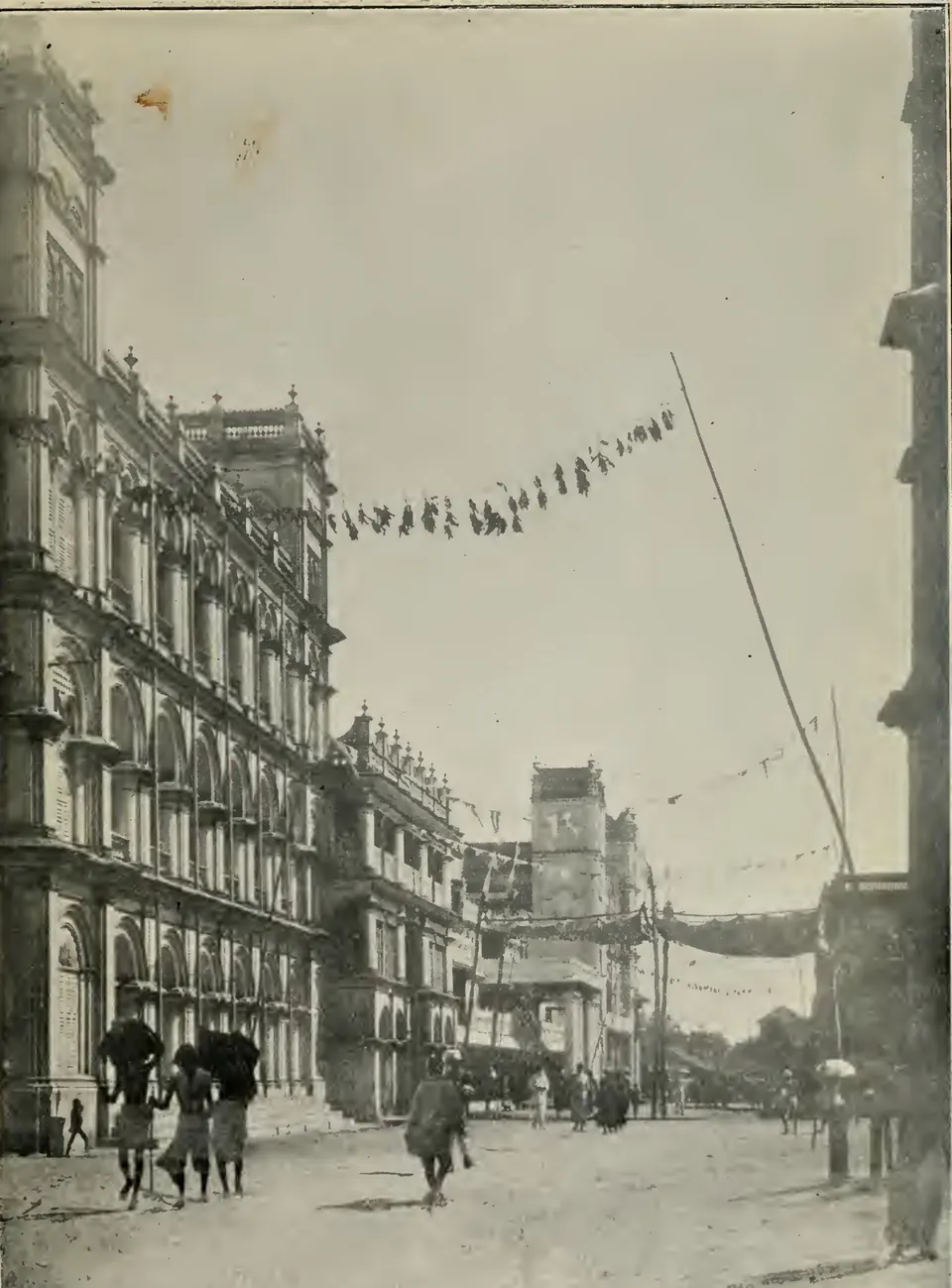
The family history lists his buildings at Venkatagiri:345
- the Indra Mahal, begun in 1880 and opened by the Governor, Sir Mountstuart Grant Duff, on 22 July 1883345
- the Town Hall, whose foundation stone Grant Duff laid on the same day345
- a Victoria Jubilee rest-house near the railway station, whose stone was laid by Lord Connemara345
He attended King Edward VII’s coronation durbar of 1903.5 After the durbar, he built Edward Hall and gave it to the town for use as the Venkatagiri Club.5
He “had been nominated to the Madras Legislative Council on two occasions”.6 He was made K.C.I.E. in 1888.6 He received the personal title of Maharaja in 1910 and the G.C.I.E. on 1 January 1915.6 At the outbreak of war in 1914 he gave three lakhs of rupees to the Madras War Fund.7
The Madras Landholders’ Association was founded on 23 July 1890, and he was its president from then until his death.8 It was formed “to guard the interests of the landed Aristocracy of the Zemindars” and to speak for them to the Government.8 He gave it a building, whose foundation stone Lord Pentland laid in January 1916.9 The family history credits his influence “in the Council Chamber” with a part in framing the Impartible Estates Act.89 See British Crown (Madras Presidency).
Footnotes
-
A Family History of Venkatagiri Rajas (1922), p. 123 (archive.org (opens in a new tab)). ↩ ↩2 ↩3 ↩4 ↩5
-
A. Vadivelu, The Aristocracy of Southern India (1903), p. 41 (archive.org (opens in a new tab)). ↩ ↩2 ↩3 ↩4
-
Family History of Venkatagiri Rajas (1922), p. 124 (archive.org (opens in a new tab)). ↩ ↩2 ↩3 ↩4
-
Family History of Venkatagiri Rajas (1922), p. 125 (archive.org (opens in a new tab)). ↩ ↩2 ↩3 ↩4
-
Family History of Venkatagiri Rajas (1922), p. 126 (archive.org (opens in a new tab)). ↩ ↩2 ↩3 ↩4 ↩5 ↩6
-
Family History of Venkatagiri Rajas (1922), p. 127 (archive.org (opens in a new tab)). ↩ ↩2 ↩3
-
Family History of Venkatagiri Rajas (1922), p. 128 (archive.org (opens in a new tab)). ↩
-
Family History of Venkatagiri Rajas (1922), p. 129 (archive.org (opens in a new tab)). ↩ ↩2 ↩3
-
Family History of Venkatagiri Rajas (1922), p. 130 (archive.org (opens in a new tab)). ↩ ↩2
Photos
 "Indra-Mahal at Venkatagiri. Opened by H.E. Sir Mountstuart Elphinstone Grant Duff, G.C.I.E., on 22nd July, 1883" (Family History of Venkatagiri Rajas, 1922, plate 126a)Historic photograph · 1922
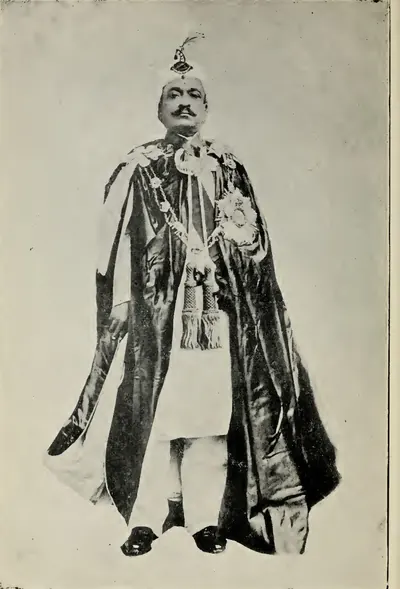 "Maharaja Sir V. Rajagopala Krishna Yachendra Bahadur, G.C.I.E. (28th Generation)" of Venkatagiri, 1857–1916 (Family History of Venkatagiri Rajas, 1922, plate 123a)Historic photograph · 1922
References
Notes (0)
Sources (2)
Spotted an error on this page? Tell us
Last updated: