Guntur Mission Hospital
The American Lutheran mission's medical work for women and children at Guntur, begun by Dr Anna S. Kugler with a dispensary in 1886. Dispensaries followed in other parts of Guntur and at Mangalagiri, and a women's hospital was planned from 1885 with money raised by Lutheran women in America; its first building opened in 1893.
Download
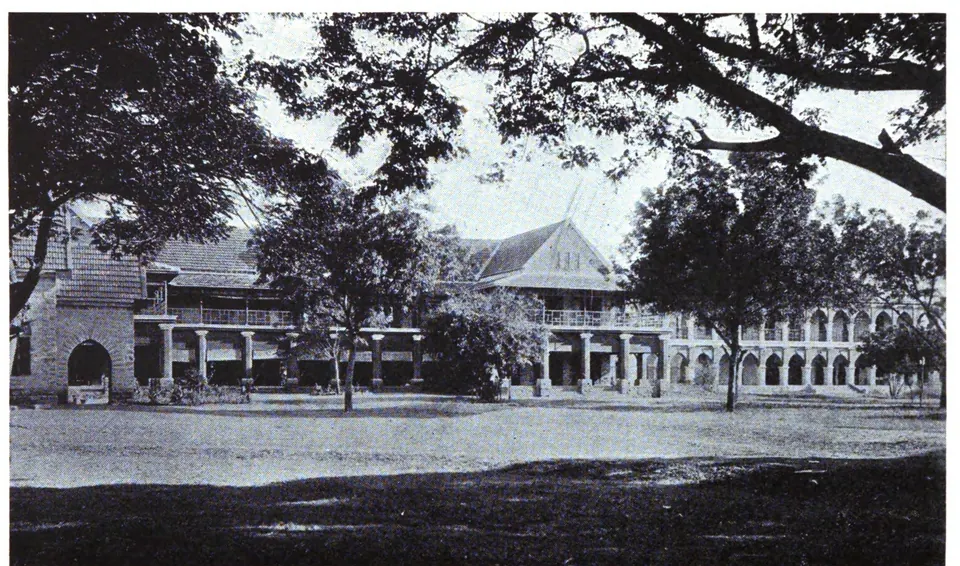
The Guntur Mission Hospital was the medical work of the American Lutheran mission at Guntur, mainly for women and children.12 It was begun by Dr Anna S. Kugler, who reached Guntur in 1883.3 In 1928 she wrote its history, mainly of the years 1898 to 1923.4 See Anna S. Kugler and Health and medicine.
Dispensaries
The mission’s leaders at home were at first doubtful about a medical mission.3 Their objections faded, and late in 1886 a dispensary for out-patients opened in Guntur town.1 In 1887 it treated 1,353 patients.1
In 1888 more dispensaries opened in different parts of Guntur, and one at Mangalagiri, thirteen miles away.1 The mission’s historian, L. B. Wolf, wrote that they helped win the trust of women, whom missionaries otherwise found hardest to reach.1
Healing and preaching
The dispensaries were openly meant to spread Christianity as well as to heal. While women and children waited, a Bible woman read and taught them, and the doctor spoke with patients as she treated them.2 Wolf described the medical work as a way of bringing the gospel into homes it had never reached.2
The women’s hospital
The missionaries began to plan a hospital for in-patients in 1885, and gave several thousand rupees themselves.5 Lutheran women in America then raised fifteen thousand dollars for new buildings.5 The first, a dispensary for out-patients, opened in February 1893.5
The plan was for thirty beds and a doctor’s house, worth in all about sixty thousand rupees.5 The mission hoped for about sixteen thousand rupees from the district’s Local Fund Boards.5 By 1896 three beds had been endowed by gifts of a thousand dollars each.5
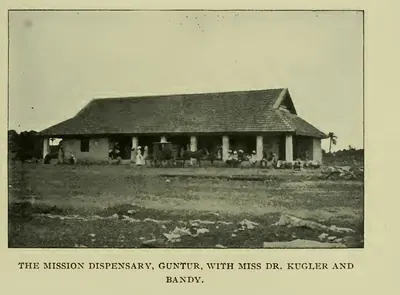
Kugler’s own history gives the later dates. Ground for the dispensary was broken on 25 February 1892, and it was formally opened on 15 February 1893.67 She called it the first building put up for medical work for women in the Telugu country.8
The main hospital building was formally opened on 22 June 1897.9 Dr Mary Baer and the nurse Katharine Fahs took in the first patients in December 1898.10 In 1899, its first year, the hospital admitted 172 patients, and 27 babies were born there.10 A Brahmin official had said that no Brahmin would ever enter it, but 11 of those 172 patients were Brahmins.10
Buildings, 1897–1923
The buildings are of grey stone.11 The main building, for 36 patients, cost Rs 44,639.12 Within five years it was crowded, so more buildings followed:13
- a chapel, the gift of an American woman, Mrs Jeremiah Zimmerman, opened on 31 March 190913
- a children’s ward, opened at Christmas 191114
- a home for nurses, opened on 2 December 191214
- a two-storey maternity and surgical block, opened on 16 December 1915 by the Governor of Madras, Lord Pentland1516
Indian patrons built for the hospital too. Rajah M. Bhujanga Rao of Eluru gave an inn (satram) for patients’ families, built in 1906 and enlarged in 1913–14.17 A well-to-do Sudra woman gave a small house, in thanks for the birth of her twins.17 By the mission’s records, its own medical buildings had cost Rs 212,000.17
Patients
By 1923 the hospital reported 105 beds to the government, twice its first size.18 Kugler’s figures for the 25 years from 1899 to 1923 show who came.18 In those years 25,531 in-patients were admitted, and 186,296 new patients came to the dispensary.18 Since its opening, 4,590 babies had been born in the hospital.19
Kugler counted the in-patients of those 25 years by community:
- 7,068 Christians, more than a quarter18
- 4,850 Brahmins, or 19 per cent18
- 8,710 Sudras, or 34 per cent18
- the rest from other castes, besides 321 Europeans and 227 Anglo-Indians18
There were no separate caste wards, but Kugler wrote that the hospital respected patients’ social position.20 High-caste patients were never offered rice and curry cooked in the hospital.20 Only caste men worked at the well, and Hindu women could bring their own drinking water, except during cholera.21
Kugler admitted that many Hindu patients, perhaps thousands, went afterwards to the temple at Mangalagiri.22 There they were purified from the “defilement” of their stay in the hospital.22 The first Caesarean operation was done in 1905, and by 1923 there had been 75.2324
Preachers and Bible women
By Kugler’s time preaching was part of the hospital’s daily life. Prayers were held every morning, and a Telugu service every Sunday in the chapel.25 The first preachers were Chegudi Joshua and Rev. Murari David, and by the end of 1923 there were thirteen.26 A shed for the men who came with women patients gave a catechist (Indian lay preacher) “a good audience”.13
Indian Bible women did most of the teaching. Kugler wrote that many patients came to the dispensary just to hear M. Harriet tell stories of Christ.2728 From 1909 K. Mary Ann taught the waiting crowds for four or five hours a day, five days a week.29
M. Parvatamma, a widow from a toddy-tapping Sudra caste, joined the mission in 1886.28 She was baptised at about twenty-five and was the only Christian in her family.28
Soubhagyamma, a Brahmin widow, first came to the hospital to nurse her sick daughter.30 Years later she was baptised, and her father-in-law, who owned their house, would no longer live with her.30 She moved to the mission’s Converts’ Home, and her Hindu son visited her every month with an allowance, but would not take her into his home.30
Converts and “secret believers”
Kugler counted a woman known as “Old Venkamma”, baptised in December 1895, as the first convert of the medical work.31 There were later baptisms of adults and infants in the wards and the chapel.31 Kugler also wrote of many “secret believers”, patients who took in the teaching but were not baptised.3233
Rajah M. Bhujanga Rao, a Brahmin zamindar (landholder), Sanskrit scholar and Telugu poet, first came in 1905 when his wife was ill.34 Kugler wrote that after his son died in 1913 he began to translate the Gospels into Telugu verse.3435 He later published the whole New Testament.35
In 1927 he wrote a tribute for Kugler’s book. He said his family were “not converts in the strict sense”, but now prayed in Jesus’ name and read the Telugu Bible.36 He gave the credit to the character of the doctors.37
Indian doctors and nurses
Dr P. Paru of Kannur (then Cannanore) joined the staff from the Madras Medical School in January 1911.38 She was not then a Christian, and was baptised on 29 October 1911.38 She stayed until March 1923, often seeing 150 to 200 patients a day at the dispensary.3839
In June 1922 Dhanamma Joshua, from the first class of the medical school at Vellore, joined the staff.39 Kugler called her the first young woman of the Guntur Mission to become a doctor.26
Katharine Fahs, an American nurse, ran the training school for nurses.40 She began with Anglo-Indian women, because Indian Christians then looked down on nursing, and educated Christian girls were all needed as teachers.40 The first certificates were given in December 1901.41
Fahs taught that no work for a patient was beneath a nurse, and she ended the custom of leaving the dirtiest work to a sweeper woman.41 By November 1923 the school had sent out 52 Anglo-Indian and 30 Indian Christian nurses and midwives.42 Kugler wrote that the Indian Christian community by then saw nursing as “worth while”.43
Money
The hospital’s upkeep from 1899 to 1923 cost Rs 477,073, not counting buildings.44 Of this, Rs 267,858 came from local receipts such as fees and gifts, and the rest from mission funds.44 A bottle of medicine at the dispensary cost two annas (one-eighth of a rupee).44
Kugler wrote that the hospital never took a government grant for its upkeep.45 From 14 February 1901 it held a “Donation Day” about every two years.45 Thousands of townspeople came, Hindus, Muslims, Parsis and Christians.45
Work beyond Guntur
The hospital also ran dispensaries elsewhere in the district. Chirala got one in 1906.46 Dr Mary Baer moved there in 1909, and a hospital for eighty patients was later built.47 Tenali had a dispensary from 1916, which the town’s fees made almost self-supporting.48
In October 1924 the mission’s council set out its medical policy. It resolved that the “chief object” of its medical work should be evangelistic (spreading the gospel).33
Where the sources disagree
The sources give slightly different dates:
- Wolf (1896) says the extra dispensaries in Guntur opened in 1888, but Kugler (1928) dates them to 1887146
- Kugler’s text dates the opening of the dispensary building to 15 February 1893, but her table of dates gives 13 February 1893749
- Kugler’s text says the first patients came in December 1898, but her table gives the hospital’s opening as 1 January 18991049
Footnotes
-
Wolf, After Fifty Years (1896), p. 193 (archive.org (opens in a new tab)). ↩ ↩2 ↩3 ↩4 ↩5 ↩6
-
Wolf, After Fifty Years (1896), p. 194 (archive.org (opens in a new tab)). ↩ ↩2 ↩3
-
L. B. Wolf, After Fifty Years, or an Historical Sketch of the Guntur Mission (1896), p. 157 (archive.org (opens in a new tab)). ↩ ↩2
-
Anna S. Kugler, Guntur Mission Hospital, Guntur, India (1928), p. iii (HathiTrust (opens in a new tab)). ↩
-
Wolf, After Fifty Years (1896), p. 195 (archive.org (opens in a new tab)). ↩ ↩2 ↩3 ↩4 ↩5 ↩6
-
Kugler, Guntur Mission Hospital (1928), p. 13 (HathiTrust (opens in a new tab)). ↩
-
Kugler, Guntur Mission Hospital (1928), p. 14 (HathiTrust (opens in a new tab)). ↩ ↩2
-
Kugler, Guntur Mission Hospital (1928), plate facing p. 31, caption (HathiTrust (opens in a new tab)). ↩
-
Kugler, Guntur Mission Hospital (1928), p. 17 (HathiTrust (opens in a new tab)). ↩
-
Kugler, Guntur Mission Hospital (1928), p. 49 (HathiTrust (opens in a new tab)). ↩ ↩2 ↩3 ↩4
-
Kugler, Guntur Mission Hospital (1928), p. 21 (HathiTrust (opens in a new tab)). ↩
-
Kugler, Guntur Mission Hospital (1928), p. 22 (HathiTrust (opens in a new tab)). ↩
-
Kugler, Guntur Mission Hospital (1928), p. 26 (HathiTrust (opens in a new tab)). ↩ ↩2 ↩3
-
Kugler, Guntur Mission Hospital (1928), p. 28 (HathiTrust (opens in a new tab)). ↩ ↩2
-
Kugler, Guntur Mission Hospital (1928), p. 29 (HathiTrust (opens in a new tab)). ↩
-
Kugler, Guntur Mission Hospital (1928), p. 30 (HathiTrust (opens in a new tab)). ↩
-
Kugler, Guntur Mission Hospital (1928), p. 32 (HathiTrust (opens in a new tab)). ↩ ↩2 ↩3
-
Kugler, Guntur Mission Hospital (1928), p. 62 (HathiTrust (opens in a new tab)). ↩ ↩2 ↩3 ↩4 ↩5 ↩6 ↩7
-
Kugler, Guntur Mission Hospital (1928), p. 55 (HathiTrust (opens in a new tab)). ↩
-
Kugler, Guntur Mission Hospital (1928), p. 63 (HathiTrust (opens in a new tab)). ↩ ↩2
-
Kugler, Guntur Mission Hospital (1928), p. 25 (HathiTrust (opens in a new tab)). ↩
-
Kugler, Guntur Mission Hospital (1928), p. 64 (HathiTrust (opens in a new tab)). ↩ ↩2
-
Kugler, Guntur Mission Hospital (1928), p. 56 (HathiTrust (opens in a new tab)). ↩
-
Kugler, Guntur Mission Hospital (1928), p. 58 (HathiTrust (opens in a new tab)). ↩
-
Kugler, Guntur Mission Hospital (1928), p. 68 (HathiTrust (opens in a new tab)). ↩
-
Kugler, Guntur Mission Hospital (1928), p. 39 (HathiTrust (opens in a new tab)). ↩ ↩2
-
Kugler, Guntur Mission Hospital (1928), p. 40 (HathiTrust (opens in a new tab)). ↩
-
Kugler, Guntur Mission Hospital (1928), p. 42 (HathiTrust (opens in a new tab)). ↩ ↩2 ↩3
-
Kugler, Guntur Mission Hospital (1928), p. 43 (HathiTrust (opens in a new tab)). ↩
-
Kugler, Guntur Mission Hospital (1928), p. 46 (HathiTrust (opens in a new tab)). ↩ ↩2 ↩3
-
Kugler, Guntur Mission Hospital (1928), p. 73 (HathiTrust (opens in a new tab)). ↩ ↩2
-
Kugler, Guntur Mission Hospital (1928), p. 67 (HathiTrust (opens in a new tab)). ↩
-
Kugler, Guntur Mission Hospital (1928), p. 118 (HathiTrust (opens in a new tab)). ↩ ↩2
-
Kugler, Guntur Mission Hospital (1928), p. 76 (HathiTrust (opens in a new tab)). ↩ ↩2
-
Kugler, Guntur Mission Hospital (1928), p. 78 (HathiTrust (opens in a new tab)). ↩ ↩2
-
Kugler, Guntur Mission Hospital (1928), p. 126 (HathiTrust (opens in a new tab)). ↩
-
Kugler, Guntur Mission Hospital (1928), p. 127 (HathiTrust (opens in a new tab)). ↩
-
Kugler, Guntur Mission Hospital (1928), p. 35 (HathiTrust (opens in a new tab)). ↩ ↩2 ↩3
-
Kugler, Guntur Mission Hospital (1928), p. 38 (HathiTrust (opens in a new tab)). ↩ ↩2
-
Kugler, Guntur Mission Hospital (1928), p. 87 (HathiTrust (opens in a new tab)). ↩ ↩2
-
Kugler, Guntur Mission Hospital (1928), p. 89 (HathiTrust (opens in a new tab)). ↩ ↩2
-
Kugler, Guntur Mission Hospital (1928), p. 95 (HathiTrust (opens in a new tab)). ↩
-
Kugler, Guntur Mission Hospital (1928), p. 97 (HathiTrust (opens in a new tab)). ↩
-
Kugler, Guntur Mission Hospital (1928), p. 81 (HathiTrust (opens in a new tab)). ↩ ↩2 ↩3
-
Kugler, Guntur Mission Hospital (1928), p. 84 (HathiTrust (opens in a new tab)). ↩ ↩2 ↩3
-
Kugler, Guntur Mission Hospital (1928), p. 99 (HathiTrust (opens in a new tab)). ↩ ↩2
-
Kugler, Guntur Mission Hospital (1928), p. 101 (HathiTrust (opens in a new tab)). ↩
-
Kugler, Guntur Mission Hospital (1928), p. 104 (HathiTrust (opens in a new tab)). ↩
-
Kugler, Guntur Mission Hospital (1928), p. 133 (HathiTrust (opens in a new tab)). ↩ ↩2
Photos
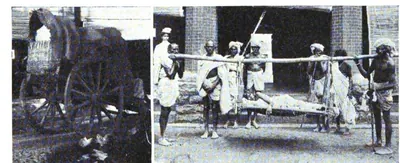 A country cart of the kind that brought patients, and a maternity patient carried to the Guntur hospital (Kugler, 1928)Book plate · 1928
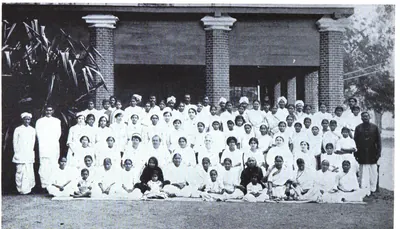
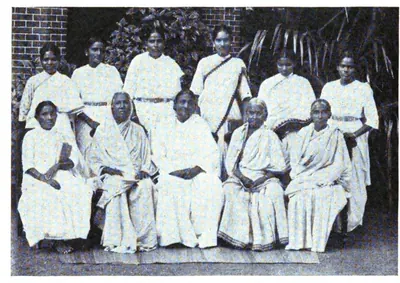 Bible women of the Guntur Mission Hospital (Kugler, 1928)Book plate · 1928
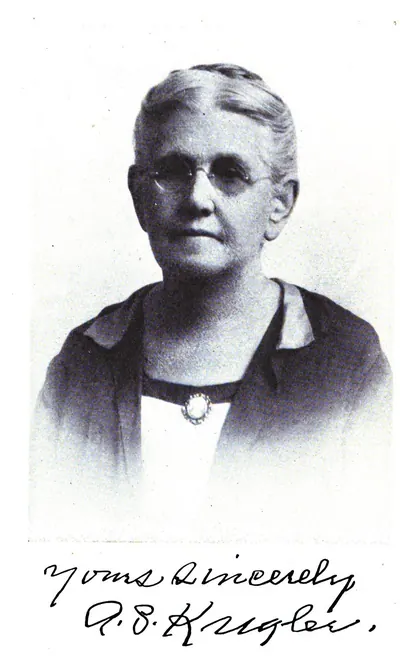 Dr Anna S. Kugler, founder of the Guntur Mission Hospital (frontispiece of her book, 1928)Book plate · 1928
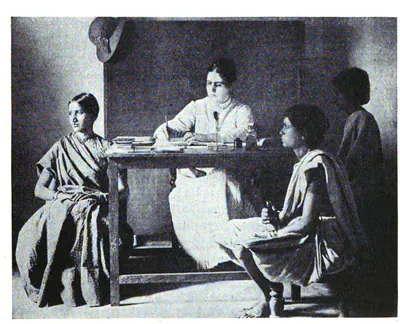 Dr Kugler's consulting room in the first rented dispensary at Guntur, 1886Book plate · 1928
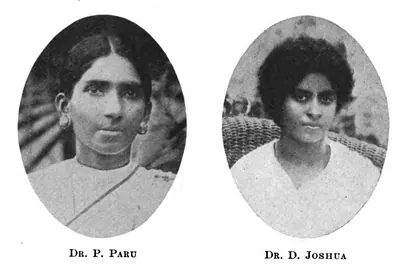 Dr P. Paru and Dr Dhanamma Joshua, the Indian doctors of the Guntur Mission Hospital (Kugler, 1928)Book plate · 1928
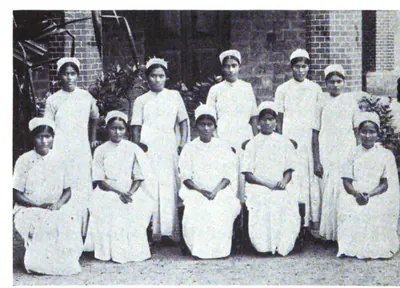 Indian Christian nurses of the Guntur Mission Hospital (Kugler, 1928)Book plate · 1928
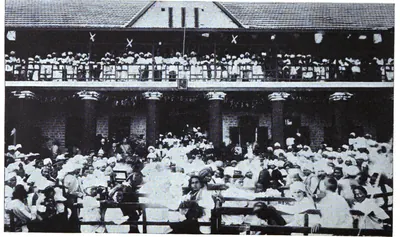 Opening day of the Guntur Mission Hospital, June 1897 (Kugler, 1928)Book plate · 1928
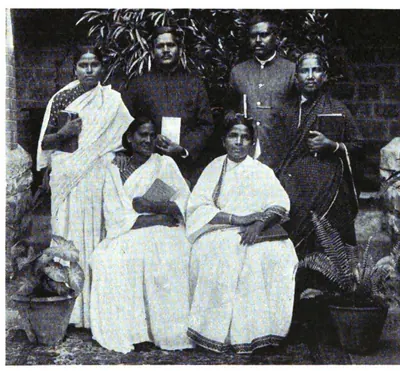 Preachers and Bible women of the Guntur hospital, with P. Sarah and M. Harriet seated (Kugler, 1928)Book plate · 1928
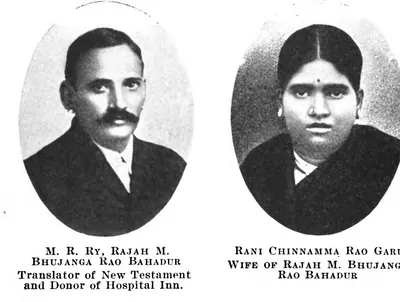 Rajah M. Bhujanga Rao of Eluru, translator of the New Testament and donor of the hospital inn, and Rani Chinnamma Rao (Kugler, 1928)Book plate · 1928
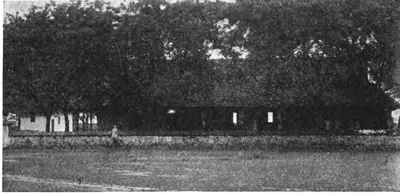 The dispensary at Guntur, "the first building erected for medical work for women in Telugu country" (Kugler, 1928)Book plate · 1928
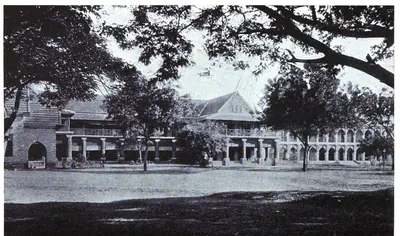 The Guntur Mission Hospital, with its chapel, main building and maternity block (Kugler, 1928)Book plate · 1928
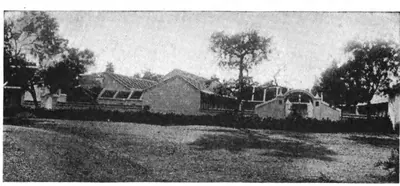 The inn (satram) for patients' families at the Guntur hospital, given by Rajah M. Bhujanga Rao of Eluru (Kugler, 1928)Book plate · 1928
References
Notes (0)
Sources (2)
Spotted an error on this page? Tell us
Last updated: